



Bike Storage Ideas for Garages and Sheds
There are many articles with bike storage ideas, but they largely suggest the same ideas: lock it up, mount it, or find a way to make it fit in the house. But we're going to take the ideas a step further. If your bike is important to you, you want storage that actually keeps it in good condition, is convenient, and doesn't make your home look like a dump. Additionally, we'll look at the best way to store your kids' bikes.
Bobbin makes bikes that fall into all three categories — vintage-style frames, hand-finished details, kids' bikes that look like miniature versions of the adult range rather than plastic toys. The way you store them affects how they look in ten years, how they ride next month, and (with kids) whether the child treats them like something worth looking after.
This guide covers four things most storage advice skips: storage as bike care, vintage-style solutions that match the bikes themselves, proper homes for kids' bikes, and the connection between storage and which bike you should have bought in the first place.
Storage as bike care
The bike needs to be stored in certain conditions so that all its parts stay in tip-top shape.
Keep it dry. Whether you have a bike shed or just a cupboard in your apartment, any interior damp or condensation will gradually wreak havoc on your bike. The saddle will go mouldy. The frame will rust on any parts where the coating is chipped or scratched. Some parts will start to squeak. Ensure that your bike shelter is well-ventilated or dehumidified to prevent any moisture build-up.
Tyres don't like sitting in one position for months. A bike left stationary for the winter develops flat spots on the tyres where they meet the floor. The cheapest fix is to inflate them to maximum pressure before storage and rotate the bike a quarter turn every few weeks. The proper fix is hanging the bike so the tyres are off the ground entirely — which is also why ceiling hoists exist.
Storing in the highest gear can help. Some cyclists recommend putting the bike into the highest gear before storing it, because this puts the chain onto a larger cog and therefore holds it under lower tension while it's not in use. When you want your bike to last many years, this can help increase the lifespan of the chain.
Don't leave the brakes squeezed. Rim brakes and disc brakes both want the pads to be away from the rim/disc when stored, not clamped against it. If you leave a bike braked over winter, you can come back to pads that have moulded to the rim or rotor and need replacement. A wedge of paper between the pad and the surface, or simply leaving the brakes released, prevents this.
Clean it before you store it. This keeps the bike in better condition, and not just aesthetically. It also prevents other issues from taking root in the bodywork and moving parts. For advice on this, check out our guide on how to clean a bicycle.

Stylish storage that makes the bike look better
Bobbin's bikes are designed to look beautiful. If you've got it safely locked away, that's great. But sometimes that means your stylish ride is kept in not-so-stylish conditions. We specialise in vintage bikes, so some of these ideas provide extra old-school storage appeal.
Keep it in a location with good lighting. Even if you have no windows on your bike shed (which is better for keeping it away from prying eyes), good interior lights help it to look fantastic as you go to get it out, rather than looking drab. Placing a light directly above the bike makes all the difference. Smart bulbs are a great way to be able to experiment between different levels of brightness or different hues.

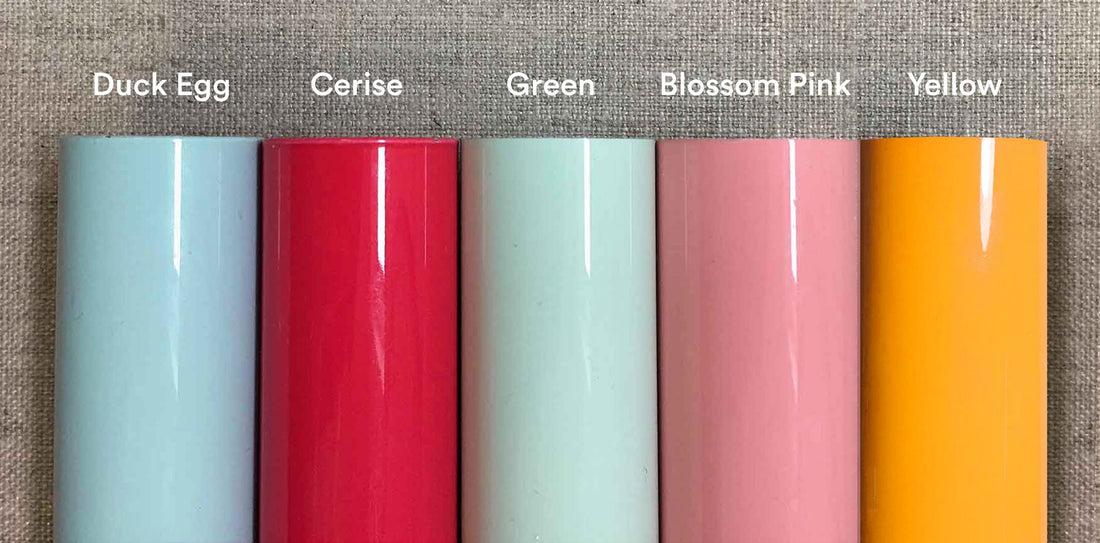
Leather hanging straps. A pair of thick leather straps mounted to the wall, looping under the top tube to hold the bike at an angle, is one of the cleanest visual solutions for a vintage frame. The hardware is minimal; the bike looks like it's been hung intentionally rather than parked. Tan leather against a duck-egg or cerise frame is a striking combination. The straps cost less than most metal racks and won't scratch the paint.
Brass and varnished-wood ceiling hooks. For your bike storage room, a single antique-style hook mounted from above lifts the bike off the floor and out of the way. It looks more like a coat hook than a piece of cycling kit — which is the point. Use two-point support for gentler impact on the wheel.
Open shelving above the bike. If a bike is stored long-term in a particular spot, the visual heaviness can be balanced by an open wooden shelf above it, holding a basket, a folded blanket, or anything that suggests the bike is part of the room rather than awkwardly stored in it. Bobbin's bikes are often paired with woven baskets and leather accessories — keeping those visible above the bike makes the whole arrangement read as a deliberate corner rather than a parking spot.
Painted bike boards. A piece of stained or painted wood mounted to the wall, with two simple pegs to hold the bike, hides the brackets and creates a frame around the bike. It's the difference between hanging a picture and pinning a poster.
The principle: hardware that's visible should be sympathetic to the bike's design. Industrial metal racks suit road bikes. Leather, brass, and wood suit a vintage upright bike. The bike spends more time being looked at than being ridden in most homes — the storage solution is part of how it looks.
Storage for kids' bikes
The most common fate of a kids' bike outside of riding is to be propped against a wall in a garage or shed, beside the paddling pool, the swingball stick, and whatever else has been accumulated over the summers. It gets scratched. The tyres go flat. The saddle gets damp. By summer the bike looks battered, and the child treats it accordingly — which is the moment they stop wanting to ride it.
Kids' bikes deserve proper storage for both the obvious reason (they cost real money and last several children if cared for) and a less obvious one: a child who sees their bike stored carefully treats it carefully. A bike that lives leaning against a paint can is a bike that will be dropped on the gravel. A bike that lives on its own hook with its helmet beside it is a bike that gets put back on its hook.
A dedicated hook at child height. The single best change most families can make is mounting a wall hook in the garage, hallway, or porch at the child's height — low enough that the child can hang the bike themselves. Two outcomes follow. The bike gets off the floor (making the tyres last longer). And the child takes ownership of the storage routine, which slightly increases the chance they take ownership of the bike and (hopefully) improve their tidiness habits generally.
The helmet lives with the bike. Whatever storage solution you pick, helmet, lock, and lights should hang next to the bike, not in a separate cupboard. Kids who don't wear helmets usually don't wear them for reasons that go beyond storage — comfort, looks, or the general "can't be bothered" of childhood. But signalling that the helmet belongs with the bike, rather than being separate optional kit, at least removes one excuse and sets the right expectation. The child who sees the helmet right there with the bike is more likely to wear it.
Treat older siblings' bikes as outgoing inventory, not clutter. When a child outgrows a 16-inch and moves to a 20-inch, the 16-inch is either going to a younger sibling, getting sold, or going to a charity shop. It is not going to live in the shed for three years "just in case." Storing outgrown bikes properly — clean, tyres inflated, indoors — keeps their resale or hand-down value. A 16-inch Bobbin Gingersnap stored properly for two years can be passed to a younger child looking nearly new; one left in a damp shed will look like firewood.
Don't store kids' bikes with toys. This is the swingball-stick principle. The toy shed is full of plastic objects that get knocked over, kicked into the bike's spokes, and slowly damage the paint. A separate spot for the bike — even just a hook in the porch or a corner of the hallway — keeps it away from the chaos and signals to the child that the bike is in a different category to plastic outdoor toys. It is.
Practical next steps
If your bike needs a home and you don't have one for it yet, the rough order to think in:
Decide indoor or outdoor first. Indoor is gentler on the bike but takes space; outdoor needs the right shed conditions.
If indoor, decide between wall, ceiling, and floor storage based on what's in short supply (wall space, floor space, or willingness to lift).
If outdoor, prioritise ventilation and security over how the storage looks. The bike won't be visible from the house anyway.
For kids' bikes, the hook-at-child-height move is the highest-return change most families can make.
If you're choosing a bike and storage at the same time, work backward from the storage. The bike that will actually get ridden is the one that's easy to retrieve and easy to put away.
Browse Bobbin's bike range
If you're shopping for a new bike with storage in mind, Bobbin's adult range includes lighter step-through frames suited to indoor storage, traditional Dutch bikes for those with proper outdoor space, and folding bikes for hallway-and-stairwell living. Bobbin's kids' range is built to be passed between siblings — which only works if it's stored properly between them.
Related Posts

Can You Take a Folding Bike on a Plane?
Yes, you can take a folding bike on an aeroplane. Normally, taking ...

Best Ways to Carry a Folding Bike
Folding bikes are designed to be lightweight and portable, and thei...

Adult Bike Without Gears - What Are the Options?
It’s a real bummer having so few options for bicycles for adults wi...